The short version
Driveway cleaning in Brisbane is quoted per driveway rather than off a rate card, because the work is driven by size and shape, surface type, how ingrained the staining is, and access to the slab, water and power. A slope, a locked gate, heavy old oil or a plan to seal afterwards all change the time involved. The only reliable figure comes from someone looking at your actual driveway and putting the scope in writing.
Key takeaways
- Driveways are quoted as a whole job, not off a fixed rate card
- Shape matters as much as area, edges, steps and borders are hand work
- Surface type sets the method, and the method sets the time
- Old oil, lichen and rust need separate treatments and dwell time
- Access, water and power availability quietly change the whole day
- Get the scope in writing after someone has actually walked the slab
The short answer: it is quoted per driveway
Driveway cleaning is quoted as a whole job after someone has looked at the slab, not read off a rate card. Two driveways of identical area can be very different pieces of work once surface, staining and access are taken into account.
That is not a dodge. It is the reason a firm number given sight-unseen over the phone is worth less than it sounds, because the person quoting has not yet seen the three or four things that decide how long they will be there.
What follows is the full list of what a quote actually turns on. Knowing it means you can describe your driveway accurately, compare two quotes fairly, and spot the one that has missed something.
The same is true of laying one in the first place, where area is similarly the least interesting number: what changes the price of a concrete driveway covers the build side of the same question, which is worth knowing if you are weighing cleaning an old slab against replacing it.
What you are paying for
Time on site, the method the surface can safely take, and the treatments a particular stain needs. Area is only one input into all three.
Size and shape do not move together
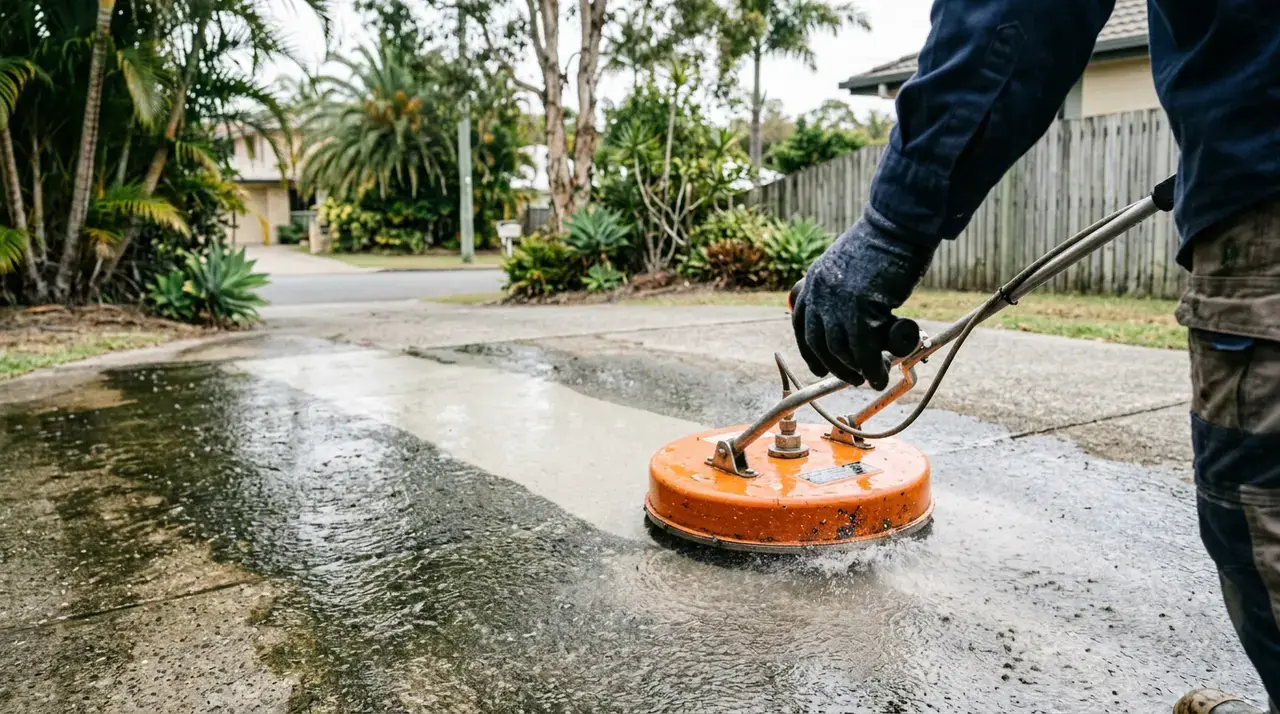
Area is the obvious factor and the least interesting one. A rotary surface cleaner covers open flat concrete quickly, so a big simple rectangle is not proportionally harder than a small one.
Shape is where the time goes. Every edge, step, garden border, expansion joint and awkward corner is hand work with a wand, and a driveway with a lot of perimeter relative to its area takes longer than its measurements suggest.
- A long straight run to a garage is quick work for its size
- A curved drive with garden beds down both sides has far more edge to detail
- Steps, landings and a separate path to the front door are additional hand work
- Turning circles and parking aprons carry the heaviest tyre marking on the property
- Adding the patio, pool surround or footpath on the same visit is more efficient than a second callout
That last point is worth raising when you call. Doing everything on one visit means one setup, one pack-down and one lot of travel, and it is the easiest saving available on any driveway job.
The surface sets the method, and the method sets the time
The single biggest variable after size is what the driveway is made of. Some surfaces take a straightforward wash and some cannot be rushed without being damaged.
Surface
What changes about the work
Sound plain concrete
What changes about the work
The most forgiving surface. Standard pressure, straightforward passes, concrete driveway cleaning as normal.
Exposed aggregate
What changes about the work
Lower pressure and a slower pass so the paste holding the stones is not stripped, with the pre-treatment doing more of the work.
Clay and concrete pavers
What changes about the work
Joints are detailed separately, weeds pulled by hand, and fresh jointing sand swept back in before the job is finished.
Coloured or stencilled concrete
What changes about the work
Low pressure only. The colour or pattern sits in the top few millimetres, so chemistry replaces force.
Older or spalling concrete
What changes about the work
Gentle wash, more assessment, and a frank conversation about what the slab can take before anything starts.
The surface is identified at the quote, because it decides the pressure, the tooling and the pace.
This is also why the same driveway can be quoted differently by two operators. One has priced a careful low-pressure clean on aggregate; the other has priced a fast pass that will loosen stones.
How ingrained the staining is
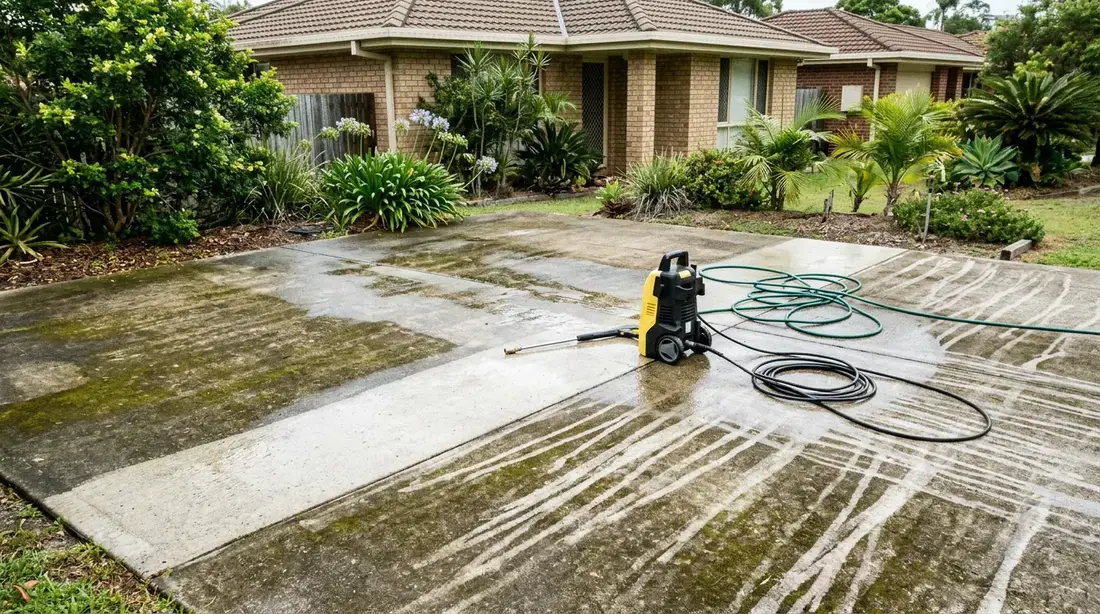
A slab washed two years ago and a slab left for a decade are not the same job. Light surface algae comes off in a single treated pass, while thick lichen and years of build-up need repeat applications and dwell time between them.
Some stains sit outside the general wash entirely. Oil, rust and leaf tannin each need their own chemistry, their own dwell and often brushing by hand, which is time that has nothing to do with the size of the driveway.
- General algae and grime, handled by the pre-treatment and the surface clean together
- Heavy lichen, needs a second application rather than a heavier hand on the trigger
- Oil and transmission drips, degreaser worked in, sometimes twice, occasionally a poultice
- Rust from garden furniture or bore water, a separate acid-based treatment and a careful rinse
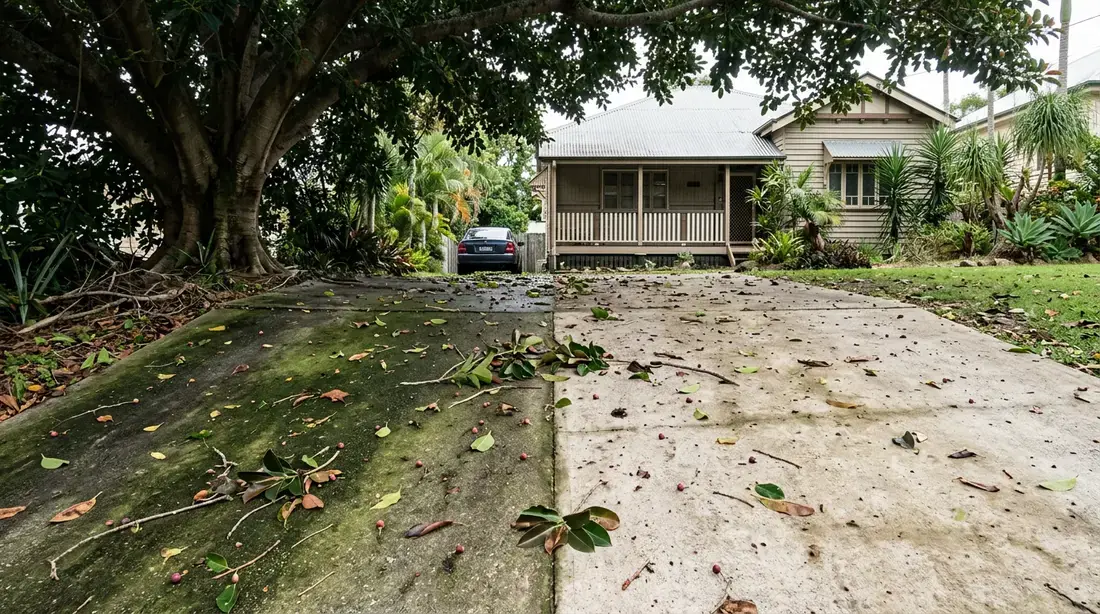
- Tannin from figs, jacarandas and mangoes, behaves like a dye, so different chemistry again
A driveway kept on a cycle is quicker to clean than one rescued after ten years, because nothing has had time to become ingrained.
Access, water and power
Access is the factor most people never think to mention and the one most likely to change the day. A machine and a surface cleaner have to physically reach the slab.
- A locked or narrow side gate that the surface cleaner will not fit through
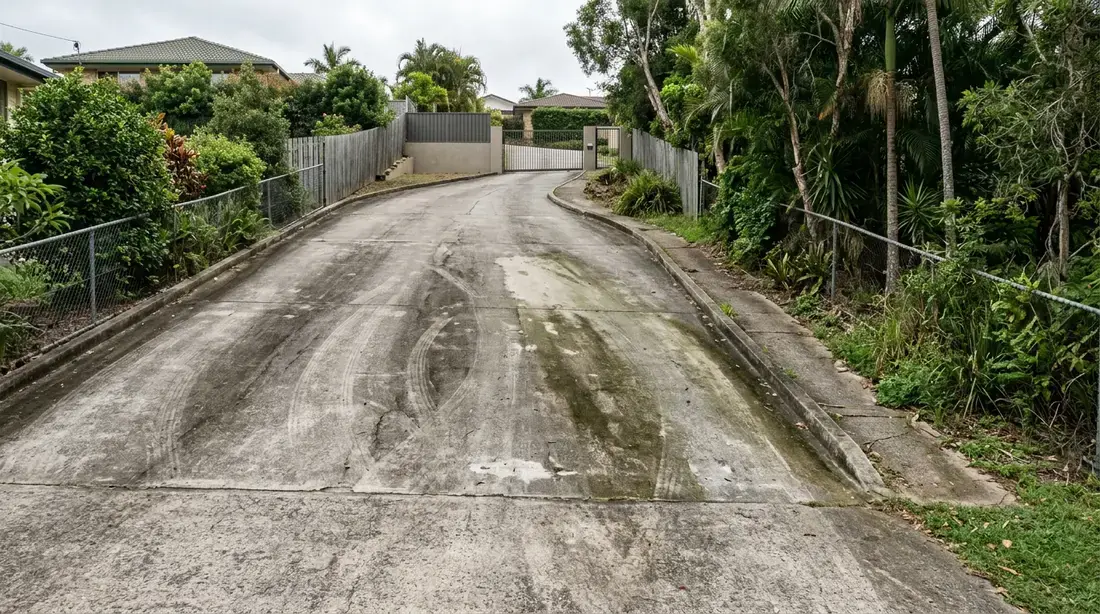
- A steep driveway, where water and treatment run off before they have finished working and every pass has to be managed
- No outside tap within reach, or a tap with poor flow, which changes what has to be brought along
- No accessible power point near the work area
- Cars that cannot be moved off the slab during the clean
- Basement or undercroft areas where drainage has to be managed rather than simply directed away
None of these are dealbreakers. They are just easier to plan for at the quote than to discover on the morning, and mentioning them when you call gets you a more accurate figure.
Say what is unusual
A slope, a gate, a bore-water sprinkler or a car that never moves are all worth mentioning up front. They are ordinary to work around and awkward to be surprised by.
One-off, regular cycle, or with sealing to follow
How the work is scheduled changes it as much as what is being cleaned. A one-off rescue clean on a neglected slab is a different job from a maintenance wash on a driveway seen every year.
Commercial and strata sites work the same way. A shared driveway or car park on an annual or six-monthly cycle never reaches the point of needing repeated treatments, which is exactly why so many buildings settle on one.
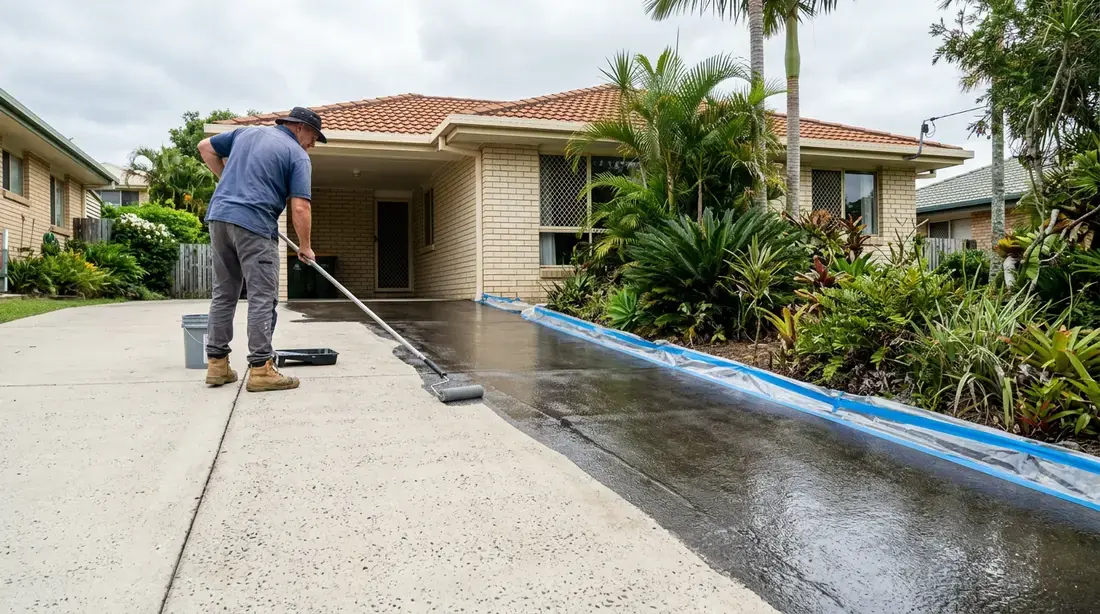
Sealing adds a second stage rather than an extra hour. The slab has to be cleaned, stripped of any failing coating, spot-treated and left properly dry before a coating goes on.
Sealing is never a same-day add-on in summer
Brisbane humidity means a washed slab usually needs a full day or more of dry weather first. Anyone offering to wash and seal in one visit in February is planning to trap moisture under the coating.
How to get a figure you can rely on
The quote is free and the assessment is the part that makes it accurate. It takes a few minutes and removes almost every reason a job changes shape later.
- 01
Describe the surface
Plain concrete, exposed aggregate, pavers, coloured or stencilled. If you are not sure, a photo taken standing over the slab answers it immediately.
- 02
Say what the stains are
Green across the shaded half is a different job from an old oil patch and a rust bloom. Naming them lets the right treatments be planned in.
- 03
Flag the access
Gates, slopes, steps, the tap and the power point. This is the detail most commonly left out and most likely to change the day.
- 04
Ask what is included
Edges and steps, spot treatments, re-sanding on pavers, and the final rinse-down should all be stated rather than assumed.
- 05
Get it in writing
A written scope after a walk-through protects both sides. It is the simplest way to make sure the job you agreed to is the job that happens.
Be wary of a firm number given before anyone has seen the driveway, and equally wary of a vague hourly arrangement with no scope attached. The useful quote is specific about the work, from someone who has walked the slab.