Driveway cleaning service
Paver and Brick Driveway Cleaning
Brick, clay and concrete pavers cleaned face and joint, with weeds pulled by hand and fresh jointing sand swept back in.
What it is
Joints included, and the units left locked together
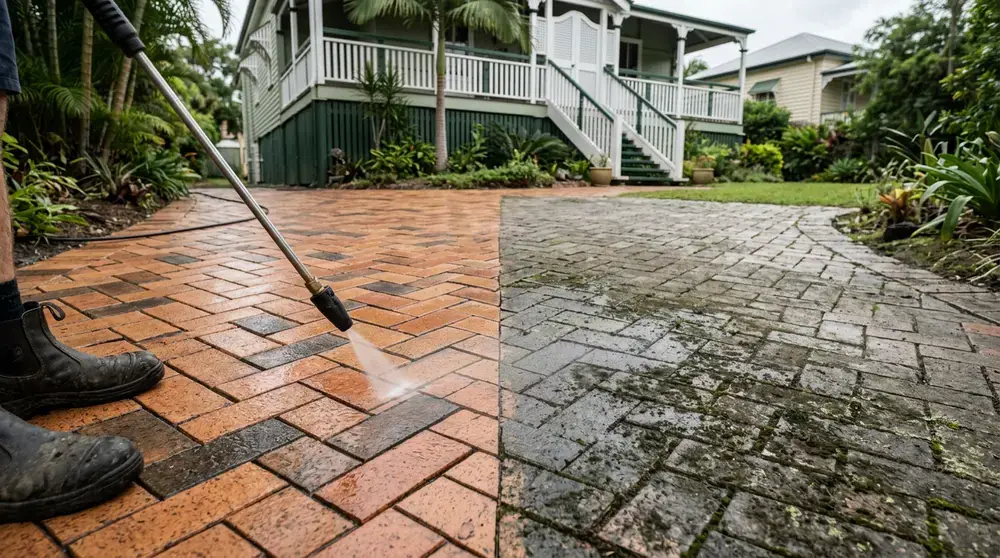
Pavers are a driveway made of joints. Every joint holds sand, water, seed and root, which is why a paved driveway greens up faster than a poured slab beside it.
Cleaning them properly means treating the joints as part of the job, not something the machine passes over.
Blast the joints out and you have a clean driveway that starts moving under traffic.
Every clean includes
- Weeds and root growth lifted out of the joints
- Paver faces cleaned without stripping the joint sand out from under them
- Efflorescence treated rather than scrubbed at
- Sunken or rocking units flagged before we start
- Jointing sand replaced and swept in once the surface is dry
- Debris and spent sand removed, not left in the gutter
Step by step
How a paver cleaning job in Brisbane runs
- 01
Assess and identify
Paver type, joint condition, any rocking or sunken units, and where the growth and staining actually are.
- 02
Pull the weeds
Established weeds and grass come out by hand first. A machine cuts the top off and leaves the root, which is back within a fortnight.
- 03
Pre-treat
Treatment across the whole surface and down into the joints, left to dwell so moss and algae are killed rather than pushed aside.
- 04
Wash the faces
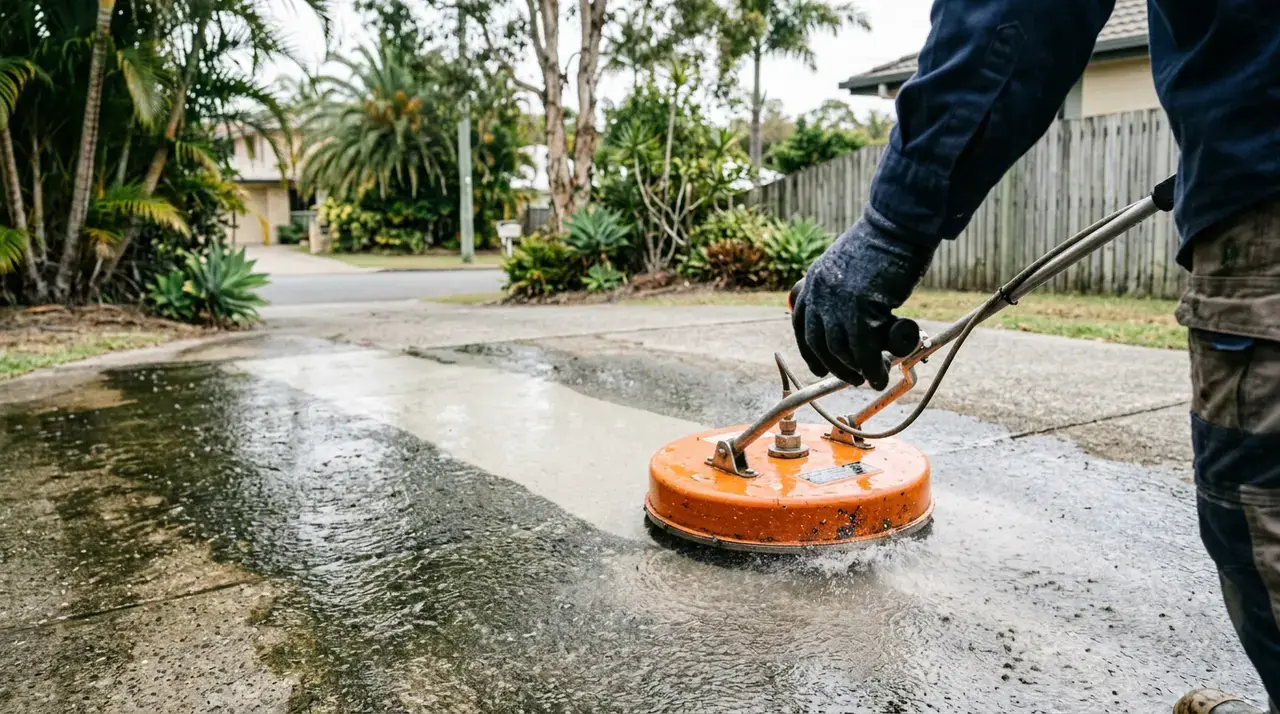
The rotary head runs over the paver faces at the pressure set for that type, with even passes so no unit is cleaned harder than its neighbour.
- 05
Detail the joints
The wand clears growth and contaminated sand at a controlled angle, without excavating down to the bedding layer.
- 06
Rinse, dry and re-sand
Everything is flushed, the surface is allowed to dry, then fresh jointing sand is swept in and watered or compacted as the product requires.
Why it happens
Joints are the whole job
Interlocking pavers work because the sand between them transfers load from one unit to the next. Take the sand out and each paver is on its own.
That is what causes the rocking and the sunken tyre tracks people blame on the base. Often the base is fine and the joints were simply washed out by a previous clean.
So the sand goes back. It is the step that takes the longest and the one most often skipped.
Don't leave it too long
What we look for on a paved driveway
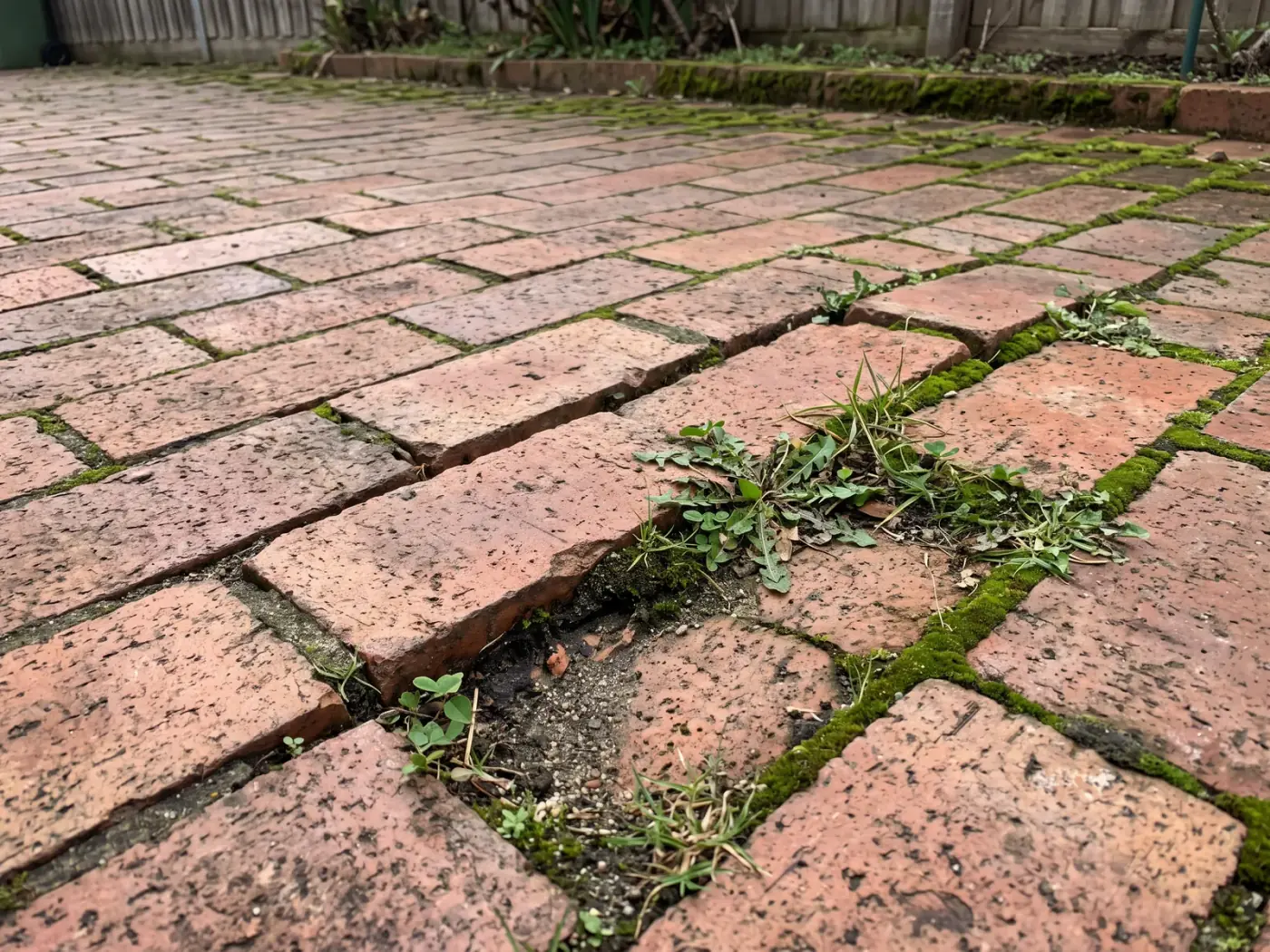
- Weeds and grass rooted into the jointing sand
- Moss starting in the joints and spreading onto the faces
- White efflorescence blooming out of concrete pavers
- Leaf tannin staining pale sandstone-coloured units
- Sunken or rocking pavers where bedding sand has washed out
- Ant nests pumping fine sand up through the joints
Matched to your surface
Clay, concrete, and the difference it makes
Clay and brick
Concrete pavers
Colour
Clay and brick
Through-body, cannot wash out
Concrete pavers
Pigment in the top layer, can be worn off
Common issue
Clay and brick
Moss in the joints, tannin staining
Concrete pavers
Efflorescence, faded face, algae
Our pressure
Clay and brick
Moderate, even overlapping passes
Concrete pavers
Lower, with the treatment doing more
After the clean
Clay and brick
Re-sand, seal optional
Concrete pavers
Re-sand, seal if the colour needs help
We identify the paver type at the quote, because it changes both the pressure and the expectation.
Clay pavers are fired, so their colour runs all the way through and they take a wash well. Concrete pavers are pigmented near the surface, and heavy pressure on an older one will lighten it by removing the coloured face.
Older concrete pavers in the wheel tracks are where we are most cautious. If the coloured face has already worn thin, a hard wash will finish the job, and there is no way back from that.
Free quote
Get a quote for paver driveway cleaning
Tell us the surface, roughly how big it is and what has stained it. We'll match the method and give you a clear price before anything is switched on.
- 01
You tell us the surface
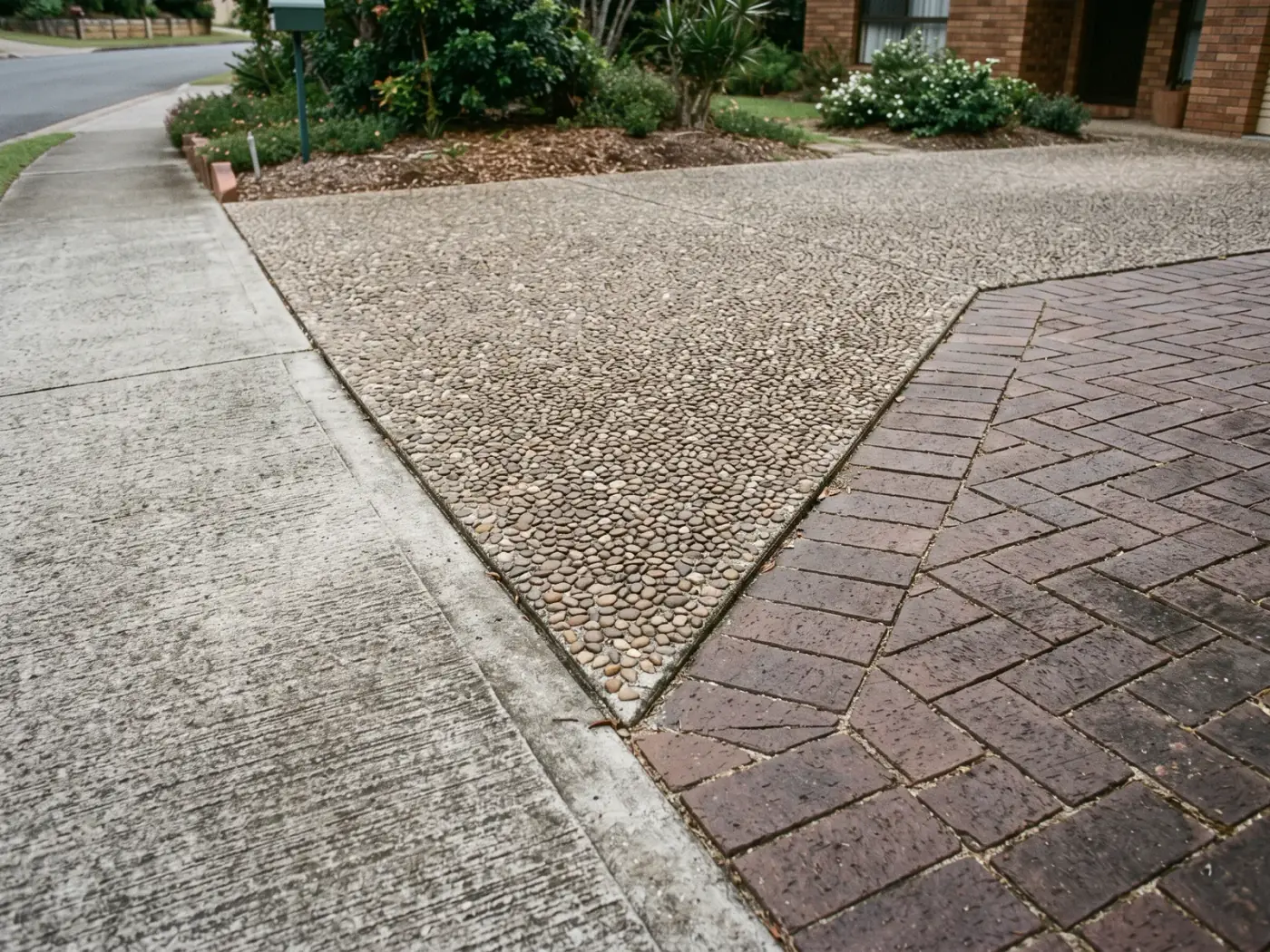
Concrete, aggregate or pavers, roughly how big, and what has stained it. A photo helps but is not needed.
- 02
We come back with a price
For the area and the work involved, including anything that needs pre-treating. Nothing starts before you have seen it.
- 03
We book a time that suits
Most driveways are a single visit. You do not need to be home, as long as we can reach a tap and the cars are moved.
Would you rather just talk it through?
(07) 2102 12287:30am - 4:00pm weekdays, 7:30am - 12:00pm weekends.
The full detail, method, surfaces, run-off and aftercare6 sections, open if you want the long version
What paver cleaning in Brisbane is really dealing with
The pavers themselves are usually in better shape than they look. Most of what makes a paved driveway look tired is in and around the joints, plus a general film across the face of the units.
- Weeds and grass rooted into the jointing sand, the single most common complaint
- Moss and algae starting in the joints, then spreading across the paver faces
- Efflorescence, the white bloom concrete pavers push out for years after laying
- Leaf tannin, which stains pale sandstone-coloured pavers heavily
- Sunken or rocking units where the bedding sand underneath has washed out
- Ant nests, which pump fine sand up through the joints in warm weather
- Tyre rubber and oil in the parking spot and at the turn
Brisbane's wet season accelerates all of it. Heavy summer rain washes jointing sand out, the gap it leaves collects organic matter, and by autumn there is something growing in it.
Joints are the whole job
A pressure washer will happily strip a joint down to the bedding layer. It looks satisfying and it is the fastest way to loosen a paved driveway, because the sand between units is what stops them shifting under a car.
So the wand angle over joints matters. We clean the joint enough to remove growth and old contaminated sand, without excavating it, and then put fresh sand back before we leave.
Why we do not chase every joint to the bottom
Interlock is what holds a paved driveway together. Sand removed below the interlock depth has to be replaced properly, and an empty joint under vehicle traffic is how a driveway starts to rut.
Re-sanding, and why we do not skip it
Sweeping new sand into the joints is the step most people never see done, and it is what separates a paved driveway that stays put from one that starts moving.
The sand has to go in dry, be swept diagonally across the joints so it packs rather than bridges, and be topped up once it settles. On a driveway carrying vehicle weight that matters far more than it does on a patio.
- Standard washed jointing sand, simple, and needs topping up periodically
- Polymeric sand, binds once wetted, resists weeds and washout, needs a dry window to cure
- Which one suits depends on your joints, your drainage and how much upkeep you want
Rain and polymeric sand do not mix
Polymeric sand needs a clear window to set. If the forecast is against us we will either use standard sand or come back for the sanding step, rather than risk a hazed, half-cured joint.
What to expect, honestly
- Efflorescence may come back. The salts are inside the paver and keep migrating out for a year or more after laying.
- A concrete paver whose face has already worn will still read lighter than its neighbours after cleaning.
- Sunken or rocking pavers are a lifting and re-bedding job, not a cleaning one. We will point them out to you.
- Weeds return eventually. Polymeric sand slows it considerably; nothing stops it forever.
Clean pavers with empty joints are a problem waiting to happen. We would rather spend the extra time re-sanding than hand back something that looks good for a month.
What the first month looks like
A re-sanded driveway settles rather than staying exactly as we left it. None of what follows is a fault, but it is worth knowing what is normal.
The sand drops
Fresh jointing sand compacts under traffic and rain for the first few weeks, so joints that looked full on the day sit slightly lower afterwards.
A top-up with a broom sorts it, and we show you roughly how much to expect before we go.
A haze across the paver faces
Fine sand dust sitting on the units after sweeping is normal, and it washes off with the next rain or a light hose.
Polymeric sand is the exception. It has to be swept off thoroughly before it is watered in, which we do on the day.
Shaded joints colour up first
The strip of paving under a fence line or along the southern side is where moss comes back earliest. It is the same reason that strip was the worst part before the clean, and it is worth a sweep every few weeks rather than a wait.
Keeping pavers clean
- Top the jointing sand up as it settles, particularly in the first few months after a clean
- Pull weeds while they are small, before the root gets down into the bedding layer
- Keep the driveway swept in autumn so leaf matter is not sitting in the joints through the wet
- Check that downpipes are not discharging straight across the paving and washing sand out
- Consider sealing pale concrete pavers, which holds the colour and makes the joints easier to keep
More we do
Related driveway cleaning services
Driveway Pressure Washing
Concrete, aggregate and paved driveways washed back to an even colour, with the pressure set to the surface in front of us.
Read moreConcrete Driveway Cleaning
Broom-finished, trowelled and coloured concrete cleaned to an even colour, with oil, rust and tannin treated separately.
Read moreCommercial and Strata
Strata driveways, car parks, ramps and forecourts, cleaned in staged sections so the site keeps working while we are on it.
Read more



Where we work
Driveway cleaning right across Brisbane
FAQ
Paver Driveway Cleaning FAQs
The questions we get asked most about paver driveway cleaning in Brisbane.
1Will pressure washing loosen my pavers?
Only if the joints are stripped out. Jointing sand is what locks pavers together and stops them shifting under vehicle weight. We clean joints at a controlled angle rather than excavating them, then sweep fresh sand back in before the job is finished.
2Do you re-sand the joints after cleaning?
Yes, it is part of the service rather than an extra. Fresh jointing sand goes in once the pavers are dry, swept diagonally so it packs into the joint instead of bridging it. We use standard washed sand or polymeric sand depending on the driveway.
3How do you stop weeds coming back in the joints?
We remove established weeds by hand before washing, so the root comes out rather than just the top. Polymeric jointing sand then makes it much harder for new seed to take hold. Nothing is permanent, but it changes the interval from months to years.
4What is the white powder on my concrete pavers?
Efflorescence, salts inside the paver migrating to the surface as moisture leaves it. It is most common on newer paving and after wet spells. We can remove the visible bloom, though it may reappear until the units have finished curing out.
5Can you clean sunken or uneven pavers?
We can clean them, but cleaning will not level them. Sunken or rocking units mean the bedding sand underneath has washed out or the base has settled, which needs the pavers lifted and re-bedded. We will show you which units are affected.
6Are clay pavers cleaned differently to concrete ones?
Yes. Clay is fired all the way through so its colour cannot be washed off, and it takes moderate pressure well. Concrete pavers carry their pigment in the top layer, so we drop the pressure and let the pre-treatment do more of the work.
Still have a question?
Give us a call and we'll give you a straight answer, no obligation.
Get a free driveway quote
Tell us the surface, roughly how big it is and what has stained it. We'll match the method and give you a clear price before anything is switched on.