Driveway cleaning service
Driveway Sealing Preparation
The unglamorous half of a sealing job, cleaned, stripped, spot-treated and properly dry before any coating goes near it.
What it is
Preparation, so the coating bonds to sound concrete
A sealer is only as good as the surface underneath it. Coatings almost always fail because of what was left on the slab, not because of the product that went over it.
Preparation is the unglamorous half of the job: cleaning, stripping, spot treatment and drying, in that order.
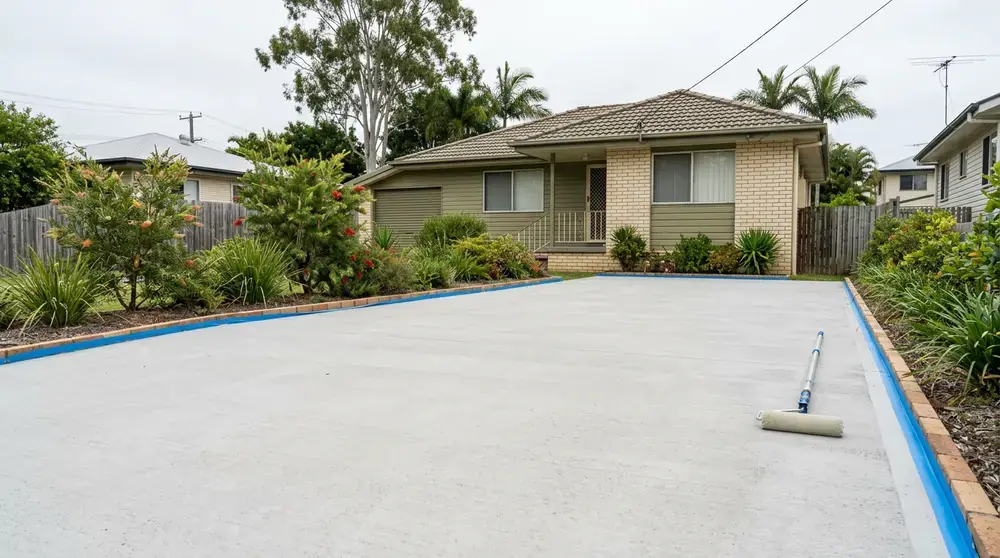
We do the preparation so the coating has sound, clean, dry concrete to grip.
Every clean includes
- Slab assessed for whether it is a candidate for sealing at all
- Full clean, with organic growth removed rather than covered
- Old or failing sealer stripped back where present
- Oil and rust spot-treated so the coating is not sealing over them
- Moisture checked before anything goes on
- An honest call if the slab needs a concreter rather than a coating
Step by step
Our preparation sequence
- 01
Inspect and test
Surface type and finish, any existing coating and its condition, moisture, and where the contamination is. A small test patch shows how the slab reacts.
- 02
Strip if needed
Any failing sealer is removed and the residue rinsed and neutralised before anything else happens on the slab.
- 03
Treat and wash
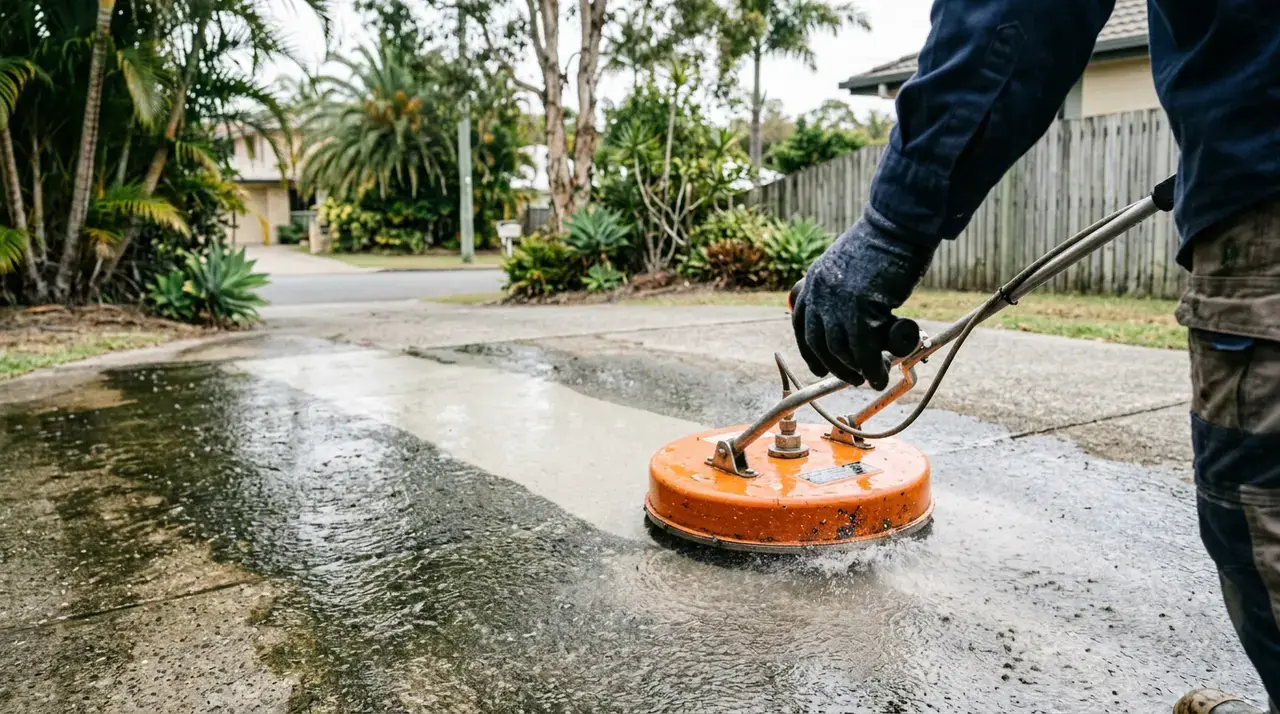
Organic growth is pre-treated and left to dwell, then the whole surface is cleaned at the pressure set for that slab.
- 04
Spot-treat contamination
Oil, rust and tannin are handled individually. Anything that would repel a coating is dealt with now rather than discovered later.
- 05
Profile if required
Etch or grind where the surface is too smooth for the sealer to key into, then rinse and neutralise again.
- 06
Dry and check
The slab is left to dry properly and moisture-checked before anyone opens a tin.
Why it happens
The step Brisbane makes hard
Concrete holds water. After a wash a Brisbane slab typically needs a full day of dry weather before it is ready, and longer in humid or shaded conditions.
The usual field check is a sheet of plastic taped down over a square metre for a few hours. If moisture collects underneath, the slab is not ready, whatever it feels like to the hand.
That is why we will not book a wash and a coat on consecutive mornings in February. Waiting for the window is less work than stripping a milky sealer in April.
Don't leave it too long
When preparation matters most
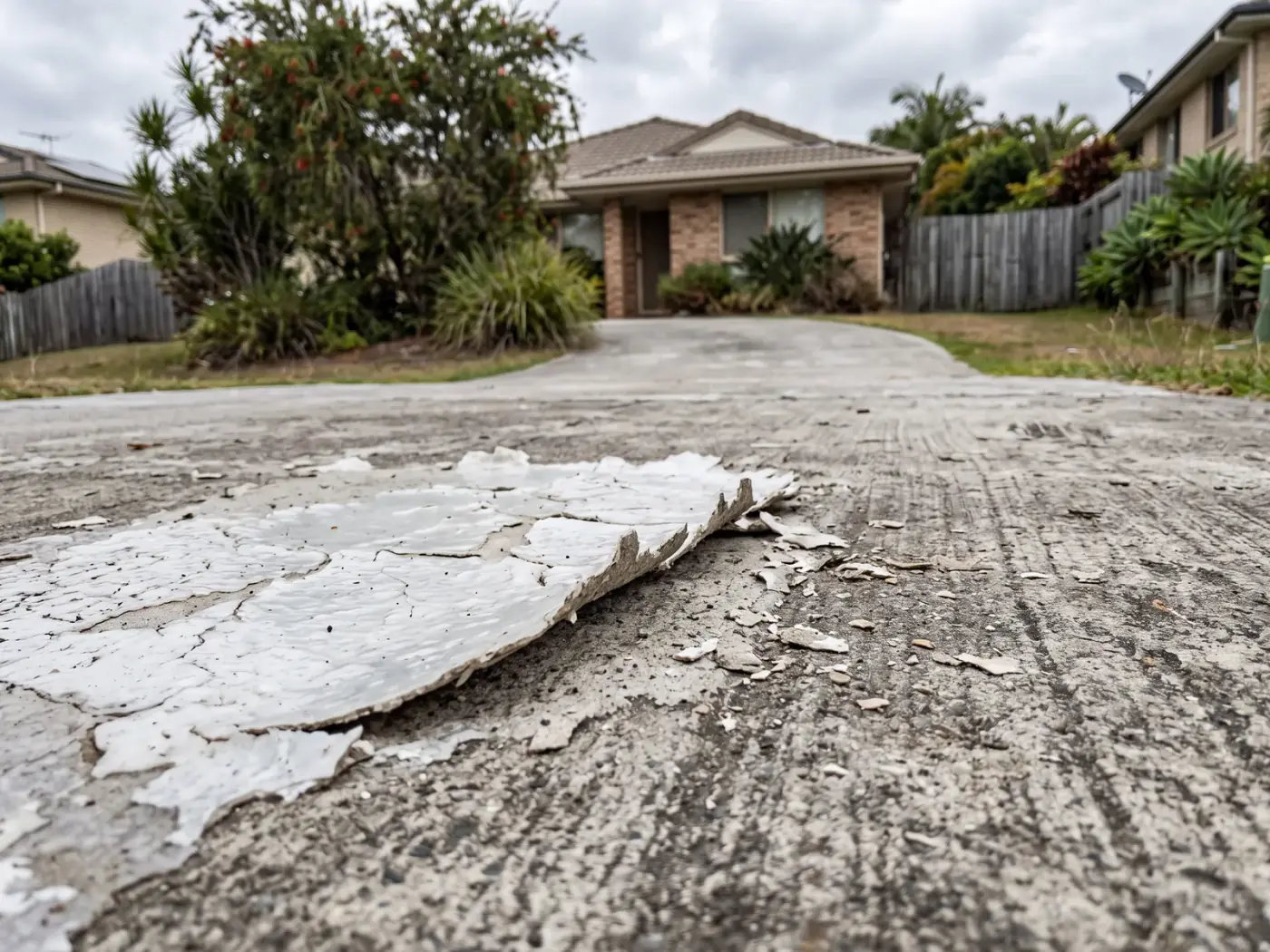
- A previous seal that has gone milky, patchy or flaky
- Dark or patchy concrete that still feels sound underfoot
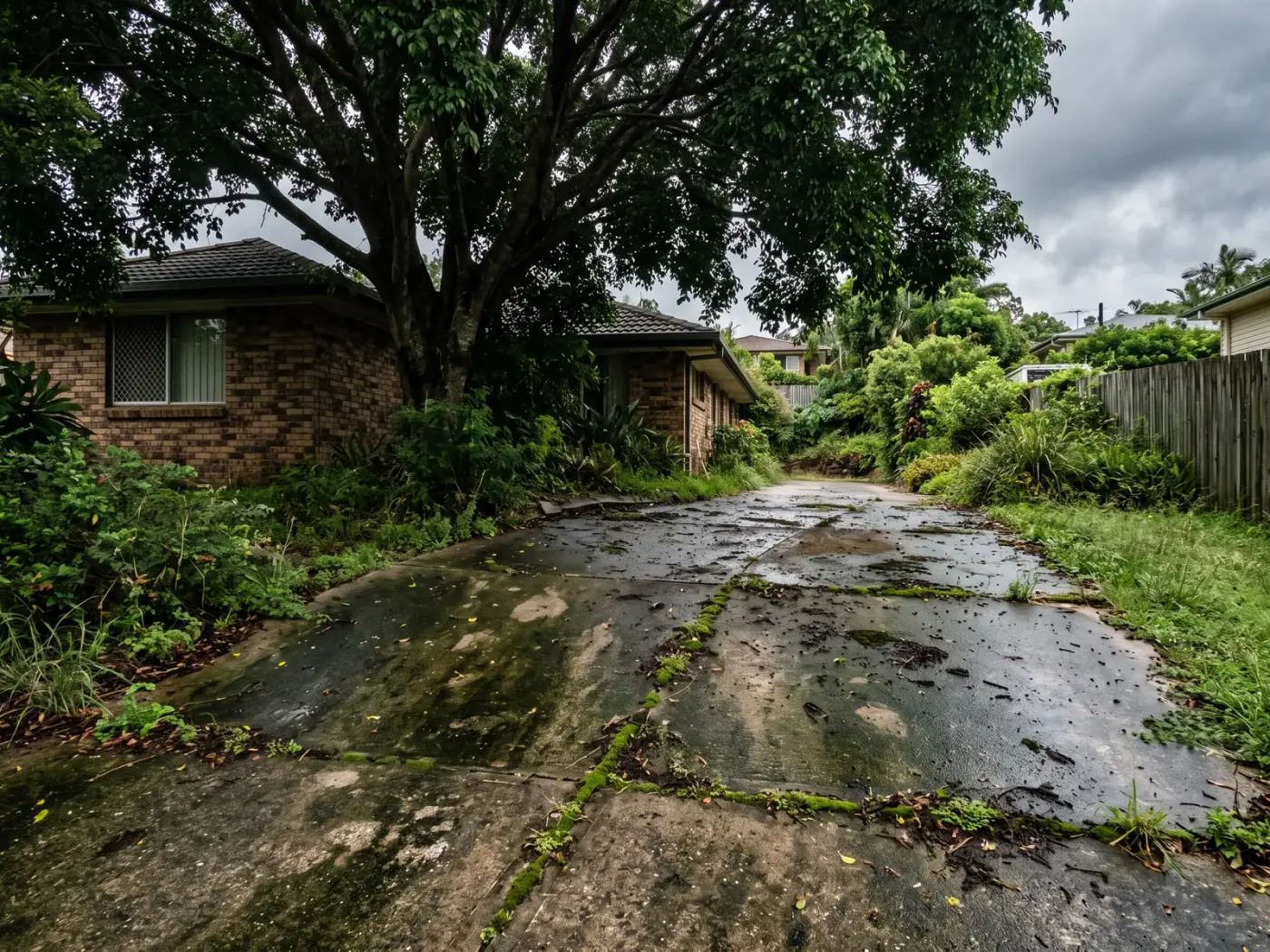
- Green or black growth through the shaded half only
- Oil staining you want covered rather than treated
- A slab that has never been sealed and you are considering it
- Any coating going on during the Brisbane wet
Matched to your surface
When sealing is worth it, and when it is not
- Yes
Porous slab under a fig or jacaranda
Tannin and constant moisture are the enemy
- Yes
Exposed aggregate you want to keep looking rich
Better colour and easier upkeep
- It depends
Full-sun slab with good fall and no trees
Often not needed; regular washing is enough
- No
Concrete that is spalling or crazing
The surface has to be fixed first
- No
A driveway you plan to replace soon
Clean it and leave it alone
A straight answer at the quote beats an upsell.
Sealing carries ongoing commitments. It has to be redone periodically, it changes how the surface looks, and it must never be applied over a stain. If those trade-offs do not suit your driveway, we will say so.
Free quote
Get a quote for sealing preparation
Tell us the surface, roughly how big it is and what has stained it. We'll match the method and give you a clear price before anything is switched on.
- 01
You tell us the surface
Concrete, aggregate or pavers, roughly how big, and what has stained it. A photo helps but is not needed.
- 02
We come back with a price
For the area and the work involved, including anything that needs pre-treating. Nothing starts before you have seen it.
- 03
We book a time that suits
Most driveways are a single visit. You do not need to be home, as long as we can reach a tap and the cars are moved.
Would you rather just talk it through?
(07) 2102 12287:30am - 4:00pm weekdays, 7:30am - 12:00pm weekends.
The full detail, method, surfaces, run-off and aftercare5 sections, open if you want the long version
Why driveway sealing in Brisbane fails
Three things kill a driveway sealer in this climate, and all three are decided before the first coat goes on.
- Sealing over organic growth. The algae dies under the coating and leaves a dark shadow that no longer washes off, because it is now sealed in.
- Sealing over a damp slab. Trapped moisture pushes back out and turns the coating milky white, usually within weeks.
- Sealing over an old, failing coat. New sealer on top of a delaminating one lifts with it, and now there are two layers to strip.
The Brisbane wet season makes the second one the most common by a distance. A slab that feels dry on top after a sunny morning can still be carrying moisture from rain two days earlier.
A sealer is permanent until it is stripped
Anything left on the concrete when the coating goes down is locked under it. Stripping a failed sealer is a bigger, slower job than cleaning the slab properly in the first place.
What preparation actually involves
Preparation is more than a wash. A slab ready for coating has to be clean, free of anything that repels the sealer, and dry through its top layer.
Removing the organic layer
Everything living on the slab is treated and washed off. Any lichen left in a low spot will show as a dark blemish under a clear coating, and by then it is under the sealer.
Stripping old sealer
Where a previous coating is failing, it comes off. Depending on the product that means a chemical stripper, mechanical removal, or both, followed by a thorough rinse and neutralising.
Dealing with oil and contamination
Sealer will not bond over oil. Contaminated patches are degreased and, where the oil has gone deep, drawn out with a poultice before the area is cleaned again.
Profiling where it is needed
A steel-trowelled or previously sealed slab can be too smooth for a coating to key into. Where that is the case, the surface is etched or ground so the sealer has something to hold onto.
Cleaning, coating, or a job for a concreter
Not every tired driveway is a sealing job, and some are not a cleaning job either.
Working out which one you have is the first honest conversation, and sometimes it ends with us telling you to call somebody else.
Signs it is a cleaning job
- Dark and patchy, but the surface still feels sound underfoot
- Green or black through the shaded half and normal-looking elsewhere
Signs the coating is the problem
- Milky white, flaking or peeling in sheets, the coating has failed and has to come off
- Blotchy where water sits and glossy everywhere else, an old sealer wearing unevenly
Signs it is a concreter's job
- Surface lifting away in thin plates, showing the aggregate underneath, that is spalling
- A network of fine surface cracks like crazed china, opening up over time
- Cracks you can get a fingernail into, or a section that has dropped
A sealer will not hide a defect
Coating over spalling or an open crack does not slow either of them down. It puts a shine on a surface that is still breaking up, and it makes the repair harder later.
Where a slab is genuinely at the end of its life, the useful advice is to clean it and put the money towards a replacement.
Stripper, run-off and the neighbours
Preparation puts stronger chemistry on the ground than a general wash does.
Stripping a failed coating in particular leaves a residue that has to be contained, neutralised and collected rather than hosed towards the nearest grate.
Containment first
The work area is bunded at the low side so residue is held on the slab instead of running off it.
Garden beds along the edge are covered or pre-wet. Anything the stripper would mark, paintwork, aluminium, a timber deck, is masked before the product is opened.
Neutralise, then collect
Stripper and acid etch are both neutralised on the slab before any rinsing happens. The rinse is directed to a contained area and the sludge picked up, which is slower than letting it run and is the whole reason the step exists.
Wind matters more than people expect
Overspray from a stripper or an etch carries further than it looks like it will. On a windy day we work smaller sections and mask wider, or we move the job, there is no fixing an etched car panel or a marked wall afterwards.
What good driveway sealing in Brisbane depends on
Once the slab is right, the coating decisions are straightforward and mostly about matching the product to the surface and the traffic it carries.
- The surface has to be clean, dry and free of any old coating that is letting go
- The weather window has to let the coating cure without rain, dew or heavy humidity
- The product has to suit the surface, aggregate, plain concrete and pavers are not the same job
- Coverage rate matters; a coat spread too thin fails early and one laid too heavy can go cloudy
- Vehicle traffic has to stay off for the full cure, not just until it feels dry underfoot
Nobody ever calls about the preparation. They call about the sealer going white, which is the preparation.
More we do
Related driveway cleaning services
Concrete Driveway Cleaning
Broom-finished, trowelled and coloured concrete cleaned to an even colour, with oil, rust and tannin treated separately.
Read moreExposed Aggregate Cleaning
Aggregate cleaned at a pressure the topping can take, so the stone comes back without the paste holding it being stripped out.
Read moreDriveway Pressure Washing
Concrete, aggregate and paved driveways washed back to an even colour, with the pressure set to the surface in front of us.
Read more



Where we work
Driveway cleaning right across Brisbane
FAQ
Sealing Preparation FAQs
The questions we get asked most about sealing preparation in Brisbane.
1Do I need to clean my driveway before sealing it?
Yes, always. A sealer locks in whatever is underneath, so any algae, oil or tannin left on the slab becomes permanent once coated. The concrete also has to be dry, because trapped moisture is the main cause of a sealer turning milky white.
2How long should concrete dry before sealing in Brisbane?
Usually 24 to 48 hours of dry weather after washing, and longer in shade or high humidity. A quick field check is to tape plastic over a square metre for a few hours, if moisture collects underneath, the slab is not ready to coat.
3Can you seal over an existing sealer?
Only if the existing coat is sound and compatible. If it is flaking, cloudy or lifting anywhere, a new coat will lift along with it. In that case the old sealer has to be stripped first, which is slower than preparing bare concrete.
4What time of year is best for driveway sealing in Brisbane?
April to September is the easier half of the year. Humidity is lower, rain is less likely and slabs dry faster, all of which matter for curing. Summer sealing is possible but needs a genuinely clear window either side of the work.
5Why has my driveway sealer gone white?
Almost always trapped moisture. Either the slab was still carrying water when it was coated, or water has since entered through a crack or an unsealed edge and cannot escape. It is fixed by stripping the affected coating, drying properly and recoating.
6How long before I can drive on a freshly sealed driveway?
Foot traffic is usually fine within hours, vehicles considerably later, often a full day or more depending on the product and the weather. The applicator's data sheet is the authority, and hot tyres on a green coating is a common way to mark a new seal.
Still have a question?
Give us a call and we'll give you a straight answer, no obligation.
Get a free driveway quote
Tell us the surface, roughly how big it is and what has stained it. We'll match the method and give you a clear price before anything is switched on.