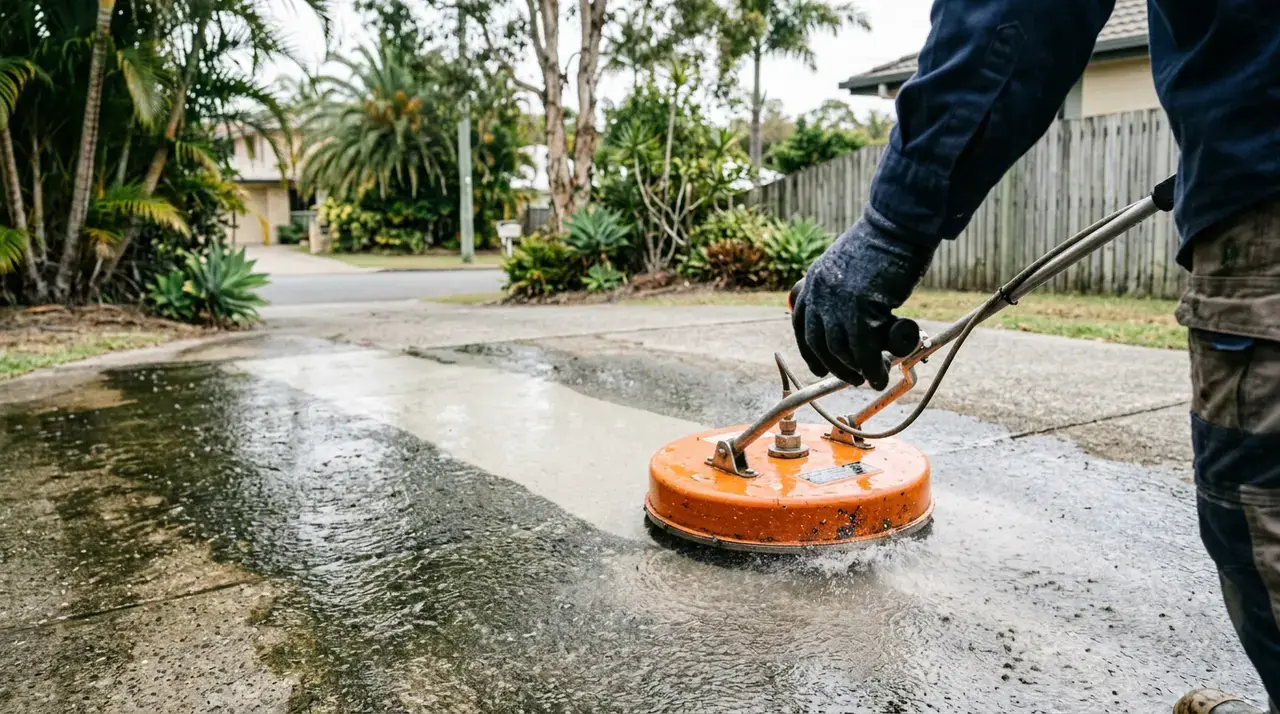
Driveway cleaning service
Commercial and Strata Driveway Cleaning
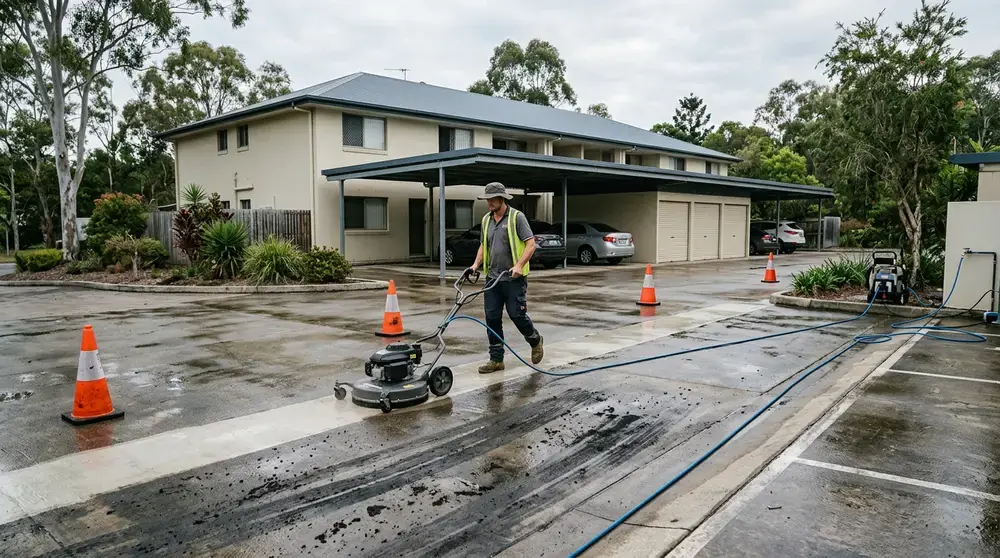
Strata driveways, car parks, ramps and forecourts, cleaned in staged sections so the site keeps working while we are on it.
What it is
Staged around access, with the scope agreed first
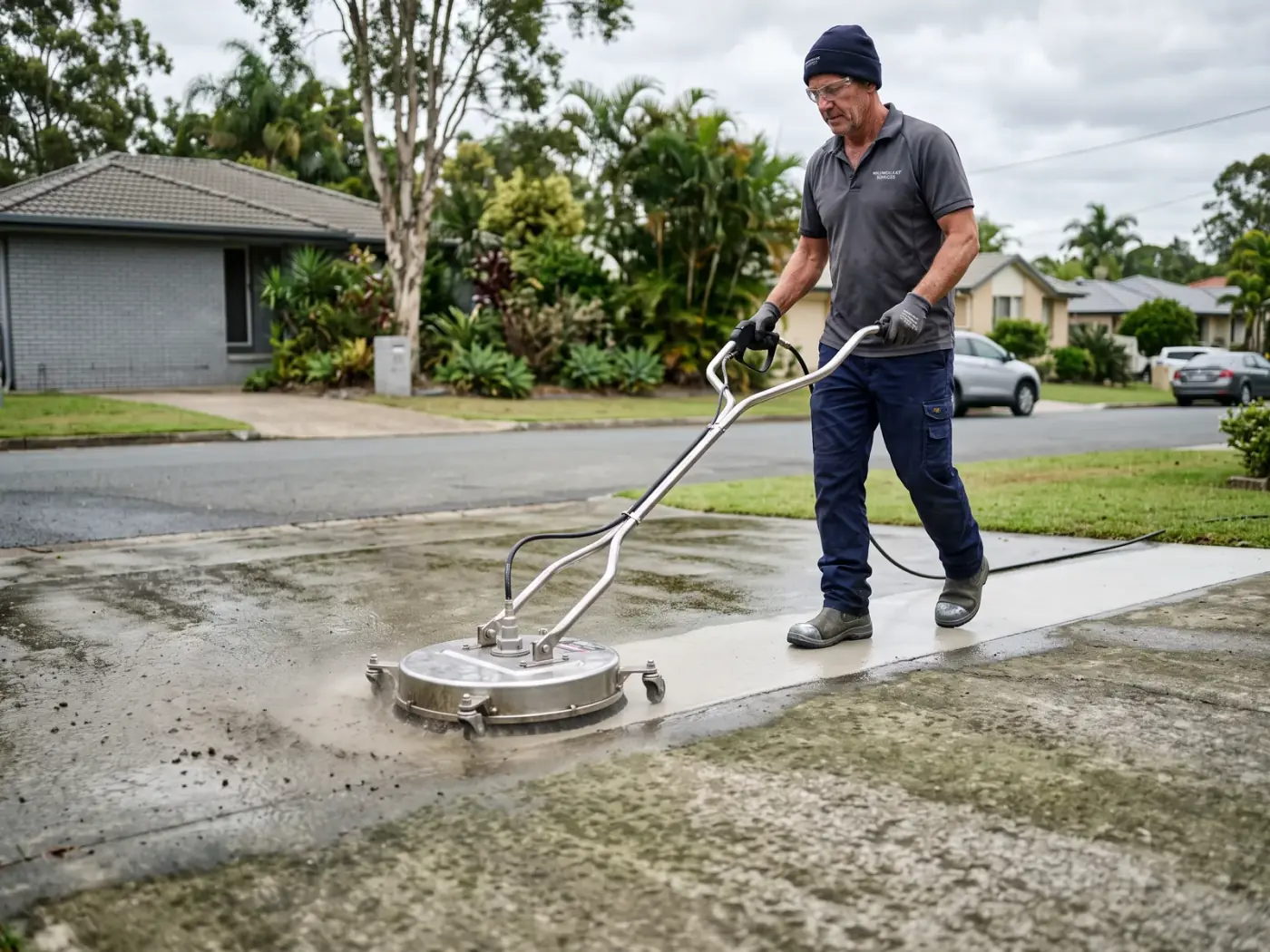
A commercial or strata driveway is a different problem from a home. Cars that cannot be moved, residents who need access, and far more traffic than any suburban slab.
The cleaning itself is familiar. The planning around it is what separates a smooth job from a complaint to the committee.
So the scope, the staging and the notice period get agreed in writing before anything starts.
Every clean includes
- Site walked and the scope put in writing before booking
- Work staged so access is never fully closed
- Notice period agreed for residents or tenants
- Line marking and painted bays worked around, not over
- Run-off directed away from stormwater where required
- Areas reopened progressively as they dry
Step by step
How we stage a site
- 01
Walk-through and scope
We walk the site with the manager, list the surfaces, note access, water, power and drainage, and agree what is in and out of scope in writing.
- 02
Plan the staging
The site is split into sections and sequenced so vehicle access is maintained, with times set around the building's quiet periods.
- 03
Notice to residents
The manager circulates dates and affected bays. Signage and cones go out on the day so nobody is caught out.
- 04
Degrease and pre-treat
Oil and rubber areas are degreased, and organic growth on the open sections is pre-treated and left to dwell.
- 05
Section by section clean
Each section is cleaned, rinsed and reopened before the next one closes, so the site never fully shuts down.
- 06
Wash down and hand back
Debris cleared, drains checked, sections handed back clean, and a final walk-through with the manager.
Why it happens
Working around people and cars
On a strata site the driveway is the only way in and out. Closing it for a day is not an option, so the work is split into sections that reopen as they dry.
That means more setup and more moves than a house, and it is the part that gets underquoted by anyone treating it as a big residential job.
Bins, deliveries and trades all need the same access on the same day. Agreeing the sequence up front is what keeps it uneventful.
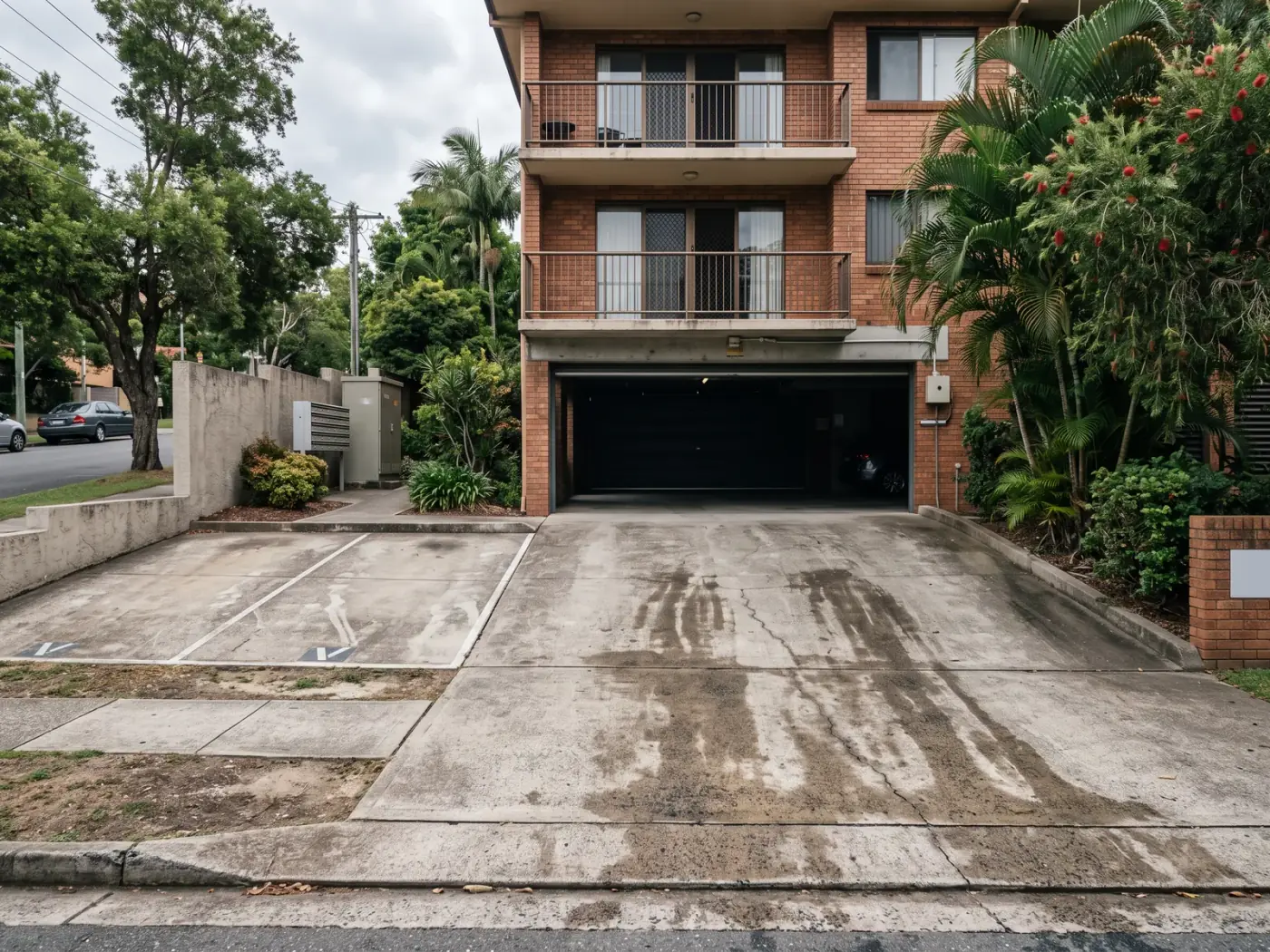
Don't leave it too long
The surfaces on a typical site
- Basement and undercroft floors, ramps and turning circles
- Shared entry driveways and crossovers
- Visitor bays and line-marked parking
- Bin stores and wash-down bays needing degreasing
- Footpaths, entries and stair landings
- Loading docks and forecourts on retail sites
Matched to your surface
The surfaces on a typical strata site
Surface
What it collects
How we handle it
Basement floor
What it collects
Tyre rubber, oil, brake dust, little organic growth
How we handle it
Degreaser led, controlled water use and drainage
Open driveway and crossover
What it collects
Algae, rubber, tannin off street trees
How we handle it
Pre-treat, dwell, then surface clean
Ramps
What it collects
Rubber build-up, and a slip risk while wet
How we handle it
Even passes, careful rinse, grip finish preserved
Line-marked bays
What it collects
General grime sitting over paint
How we handle it
Lower pressure across markings so they are not lifted
Bin stores
What it collects
Organic residue, odour, leachate staining
How we handle it
Degrease, wash, then a sanitising rinse
One site, several methods. Running a whole car park at one setting is how line marking gets destroyed.
Free quote
Get a quote for commercial and strata
Tell us the surface, roughly how big it is and what has stained it. We'll match the method and give you a clear price before anything is switched on.
- 01
You tell us the surface
Concrete, aggregate or pavers, roughly how big, and what has stained it. A photo helps but is not needed.
- 02
We come back with a price
For the area and the work involved, including anything that needs pre-treating. Nothing starts before you have seen it.
- 03
We book a time that suits
Most driveways are a single visit. You do not need to be home, as long as we can reach a tap and the cars are moved.
Would you rather just talk it through?
(07) 2102 12287:30am - 4:00pm weekdays, 7:30am - 12:00pm weekends.
The full detail, method, surfaces, run-off and aftercare6 sections, open if you want the long version
What commercial pressure cleaning in Brisbane usually means
Most commercial work is not one big open slab. It is a set of connected surfaces that all need different handling on the same visit.
- Basement and undercroft car park floors, including ramps and turning circles
- Shared entry driveways and crossovers, which take every vehicle on the site
- Visitor bays and line-marked parking, where the paint has to survive the clean
- Bin store areas and wash-down bays, which need degreasing more than pressure
- Footpaths, entries and stair landings around the building
- Loading docks and forecourts on retail and light industrial sites
Traffic volume is what changes the job. A shared driveway carrying forty vehicles a day accumulates rubber, oil and brake dust at a rate no home driveway does, and the wheel tracks are almost always the worst part of the site.
Working around people and cars
Nobody on a strata site is pleased about their driveway being closed. So the first conversation is about staging, not pressure.
We split the site into sections and work them in sequence, so there is always a way in and out. On busy buildings that means early starts, or weekend work while the car park is emptier.
Notice matters as much as scheduling. Where a manager can give residents a few days' warning about which bays are affected and when, the whole job runs faster and with far fewer interruptions.
Access is the biggest variable
Whether we can work a section at a time, whether cars can be relocated, and whether there is a water point and power near the work all change how long a site takes. We work that out at the walk-through.
What a bad commercial clean leaves behind
The complaints that reach a body corporate after a rushed car park clean are remarkably consistent, and nearly all of them come from running an entire site at one setting.
Line marking gone or ghosted
Bay lines and hatching are paint sitting on concrete.
A surface cleaner at full pressure lifts the edges first, so the marking survives the visit and then looks ragged a month later. Re-marking a car park is a far bigger job than the clean was.
Stripes down the ramp
Ramps often get done with a wand, because the slope makes a surface cleaner awkward to control. Wand marks on a ramp are visible from the street and they do not wash out.
Water where it should not be
Basement work pushed the wrong way ends up in lift pits, storage cages and against tenant garage doors. It is the quickest way to turn a maintenance job into an insurance conversation.
None of those are exotic failures.
They are what happens when a whole site is treated as one surface instead of five.
Run-off, drainage and doing it properly
Commercial work puts more water on the ground than a home job, and it puts it somewhere that usually drains to stormwater. That is a real obligation rather than a formality.
- Run-off is directed away from stormwater inlets wherever the wash carries oil or degreaser
- Basement work is managed towards the site's own drainage rather than out the ramp
- Debris is collected rather than flushed into pits and grates
- Wet areas are coned and signed while they dry, because a wet ramp is a slip hazard
We also work around the building's own rules. Some sites restrict noise before a set hour, some require an induction, and some are specific about which drains can be used. Tell us at the walk-through and it gets planned in.
Wet ramps and slip risk
A freshly washed ramp is slippery until it dries. We cone and sign every wet section and sequence the work so residents are never routed across one.
Quoting commercial pressure cleaning in Brisbane
Every site is quoted after a walk-through, because the variables that actually drive the work are not visible in a photo.
- Total area, and how much of it is basement versus open to the weather
- The surfaces involved, and whether line marking or coatings need protecting
- How heavy the oil and rubber build-up is in the wheel tracks and bays
- Access, whether we can stage sections, and whether cars can be moved
- Water and power availability on site
- Whether the work has to happen out of hours or over a weekend
- Frequency, if you want it on a schedule rather than as a one-off
Sites on a regular cycle are simpler to clean than sites left for years, because the build-up never reaches the point of needing repeated treatment. Many buildings settle on an annual or six-monthly clean for exactly that reason.
We quote what we can see and what we agree to do, in writing, before anyone starts. No surprises for the committee.
Who this suits
- Body corporates and strata committees maintaining shared driveways and car parks
- Building and facilities managers with a maintenance schedule to keep
- Real estate agents preparing a property for sale, lease or handover
- Retail and hospitality sites with a customer-facing forecourt or entry
- Light industrial and warehouse yards with loading areas and hardstand
- Childcare, medical and aged care sites where slip risk is a standing concern
We work Brisbane-wide within around 30km of Wynnum West, which covers the bayside, the inner east, the southside, the Redlands and central Brisbane.
More we do
Related driveway cleaning services
Driveway Pressure Washing
Concrete, aggregate and paved driveways washed back to an even colour, with the pressure set to the surface in front of us.
Read morePaver Driveway Cleaning
Brick, clay and concrete pavers cleaned face and joint, with weeds pulled by hand and fresh jointing sand swept back in.
Read moreConcrete Driveway Cleaning
Broom-finished, trowelled and coloured concrete cleaned to an even colour, with oil, rust and tannin treated separately.
Read more



Where we work
Driveway cleaning right across Brisbane
FAQ
Commercial and Strata FAQs
The questions we get asked most about commercial and strata in Brisbane.
1Can you clean a car park without closing it?
Usually, yes. We split the site into sections and clean them in sequence, reopening each one before closing the next, so there is always a way in and out. On tight sites, early starts or weekend work keeps the disruption down.
2Do you work outside business hours?
Yes. Early morning and weekend work is common on strata and retail sites where the car park is busy during the day. Our standard hours are weekdays from 7:30am and weekend mornings, and out-of-hours work is arranged at the walk-through.
3Will pressure cleaning remove our line marking?
Not if the pressure is managed. Line marking is paint on concrete, so we drop the pressure and change the angle over markings rather than running the whole car park at one setting. Very old, worn marking may lift regardless, and we flag that first.
4How do you handle wash water and run-off?
Run-off is directed away from stormwater inlets where it carries oil or degreaser, and debris is collected rather than flushed into pits. Basement work is managed towards the site's own drainage. If your building has specific requirements, raise them at the walk-through.
5Who do you deal with on a strata job?
Usually the building manager, the strata manager or the body corporate committee, depending on how the building is set up. We provide a written scope after the walk-through so the committee has something concrete to approve before work is booked.
6How often should a strata driveway be cleaned?
Six to twelve months suits most Brisbane buildings. Shared driveways collect rubber and oil far faster than a home slab, and open sections green up over the wet season. Sites on a regular cycle are quicker to clean because build-up never becomes ingrained.
Still have a question?
Give us a call and we'll give you a straight answer, no obligation.
Get a free driveway quote
Tell us the surface, roughly how big it is and what has stained it. We'll match the method and give you a clear price before anything is switched on.