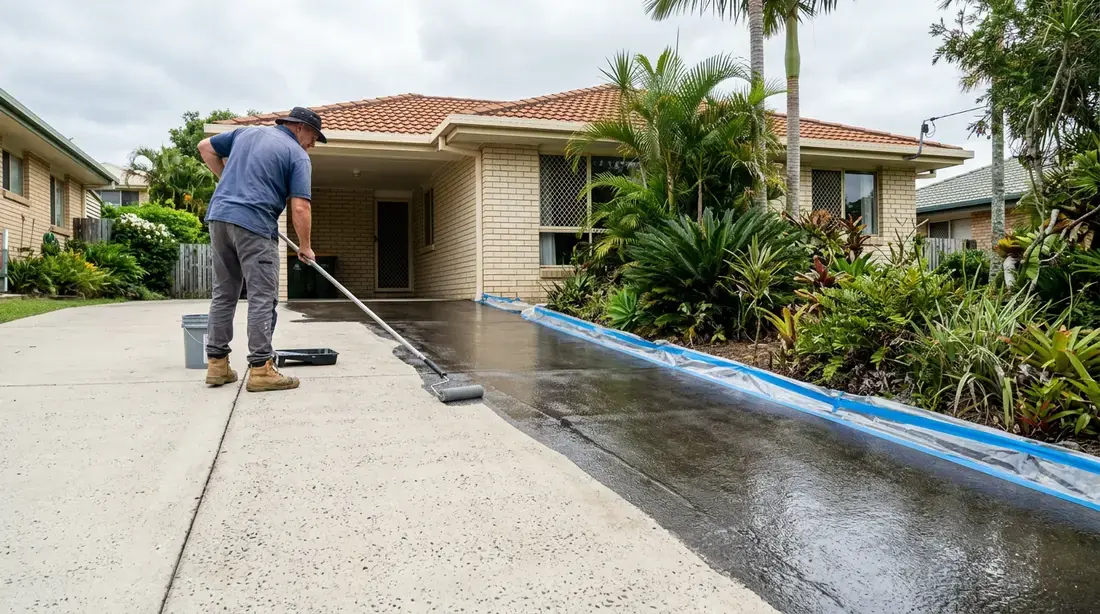
The short version
Sealing after a clean is worth it on porous, shaded or tree-covered slabs and often unnecessary on a full-sun driveway with good drainage. A sealer closes the pores so oil, tannin and moisture sit on the surface instead of soaking in, which slows regrowth and makes spills easier to deal with. The two conditions that decide whether it works are that the slab must be genuinely clean and properly dry first, because a coating locks in whatever is underneath it.
Key takeaways
- Sealing helps most on porous, shaded and tree-covered driveways
- A full-sun slab with good drainage usually does fine on regular washing
- The slab must be clean and dry first, a sealer locks in whatever is beneath
- Brisbane humidity means the drying step is the hard part, not the coating
- Penetrating and film-forming sealers behave and fail differently
- Sealing is a commitment to recoating, not a one-off fix
The honest answer: sometimes
Seal it if the slab is porous, shaded, under a tree, or somewhere you park and drip on daily. Skip it if the driveway sits in open sun with good fall and nothing overhanging, because a wash every year or two will keep it looking right on its own.
Sealing is not a standard step after every clean and it is not something a driveway needs. It is a specific answer to a specific problem, and the problem is a surface that keeps drinking things in.
The rest of this comes down to what your slab is made of, where it sits, and how much upkeep you actually want.
One rule with no exceptions
A sealer locks in whatever is under it. Clean first, dry properly, and never coat a slab with a stain, algae or a failing old coating still on it.
What a sealer actually does
Bare concrete is porous. Water, oil, leaf tannin and rust all travel down into it, which is why a stain on an unsealed slab is inside the material rather than on top of it.
A sealer closes or occupies those pores. Spills sit on the surface where they can be wiped away, and the concrete holds less moisture, which is what algae was living on.
- Oil and tannin are shed rather than absorbed, so drips stop becoming permanent shadows
- Regrowth slows, because the damp surface algae needs is much less available
- The slab is easier to wash, and the next clean is a lighter job
- The colour deepens slightly, which some people like and some do not
- On exposed aggregate the stone reads richer, which is the main reason it gets sealed
What it does not do is repair anything. Cracks, spalling, worn tracks and colour variation between older and newer sections all remain, and a glossy coating can make them more obvious rather than less.
When it earns its keep, and when it does not
The case for sealing gets stronger the wetter and more porous the situation is. It gets weaker the more sun and drainage the driveway already has.
Worth doing
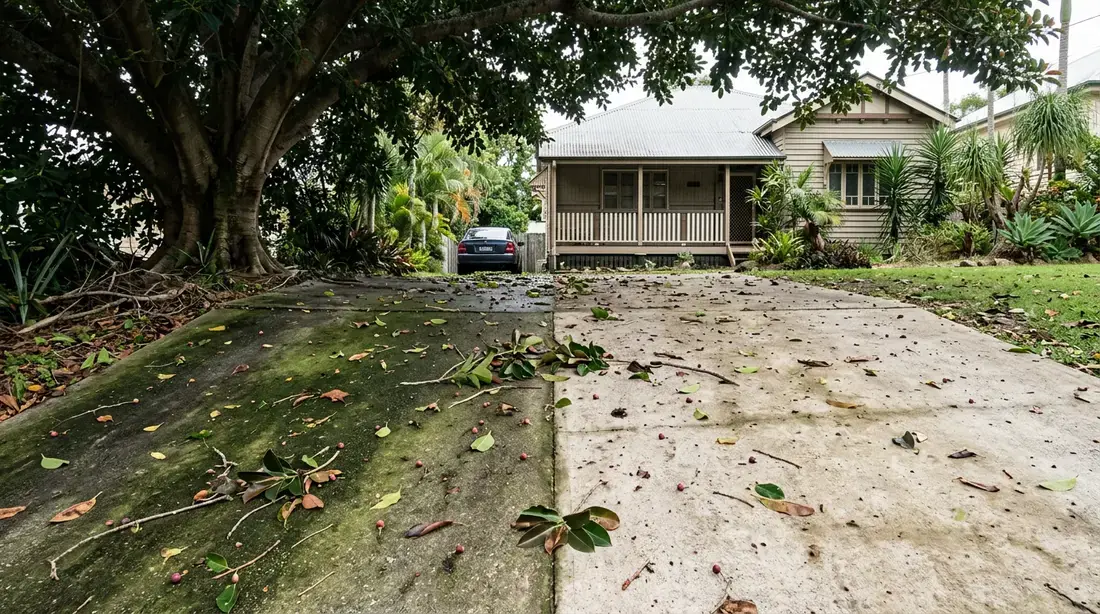
- A porous slab under a fig, jacaranda or mango that nobody intends to remove
- Exposed aggregate you want to keep looking rich rather than washed out
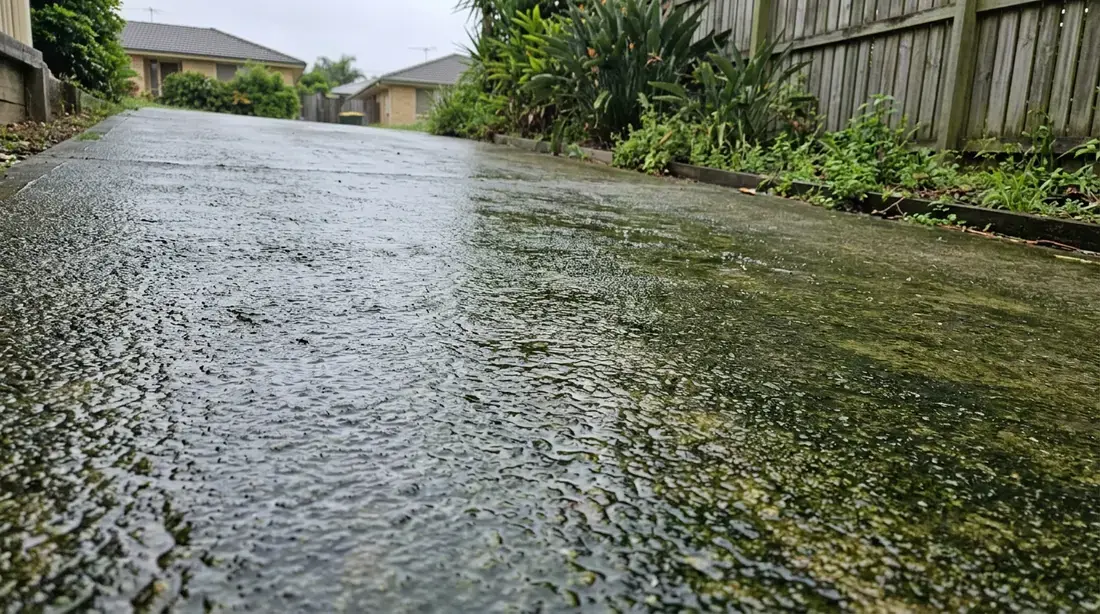
- A permanently shaded driveway that greens up inside a single wet season
- Concrete or clay pavers where you want the joints easier to keep and the colour held
- A slab you park on daily and are tired of degreasing
Usually not worth doing
- A full-sun driveway with good fall and no trees over it
- Concrete that is spalling, crazing or already breaking down at the surface, that needs fixing first
- A driveway you plan to replace in the next couple of years
- Any slab where the existing stains have not been dealt with yet
Sealing is a genuine answer to a shaded, porous, tree-covered driveway. On a sunny open slab it is mostly an expense with a recoat attached.
The two kinds of sealer, in plain terms
Products vary enormously, but almost all of them fall into one of two families, and the two behave differently enough that the choice matters.
Penetrating sealer
Film-forming sealer
How it works
Penetrating sealer
Soaks into the concrete and repels water from within the pores
Film-forming sealer
Sits on the surface as a thin continuous coating
Appearance
Penetrating sealer
Little or no change to the look of the slab
Film-forming sealer
Adds sheen, and deepens the colour noticeably
Grip when wet
Penetrating sealer
Generally unchanged, since the surface texture is untouched
Film-forming sealer
Can be slick unless a grip additive goes into the coat
How it fails
Penetrating sealer
Quietly wears off; water simply stops beading
Film-forming sealer
Flakes, lifts or goes cloudy, and needs stripping
Best suited to
Penetrating sealer
Plain concrete where the look should stay the same
Film-forming sealer
Exposed aggregate and pavers where richer colour is the point
The right family depends on the surface, the slope and whether you want the appearance changed at all.
Slope is the one to think hardest about. A film-forming sealer on a steep driveway can be slippery in the wet, and a grip additive is the standard answer rather than an optional extra.
Timing: Brisbane makes the drying the hard part
Coating a damp slab is the most common way a driveway sealer fails in this city. Trapped moisture pushes back out, cannot get through the coating, and turns it milky white, usually within weeks.
After a wash, a Brisbane slab typically wants a full day or more of dry weather before it is ready, and longer in shade or high humidity. The surface feeling dry to the hand proves very little.
The standard field check is a sheet of plastic taped down over a square metre for a few hours. If moisture collects underneath, the concrete is still releasing water and the tin stays shut.
24-48 hrs
Typical dry time after washing
Under 75%
Relative humidity you want for coating
Apr to Sep
The easier half of the Brisbane year
Nobody should wash and seal on the same day in summer
In February a slab washed in the morning is nowhere near ready by the afternoon. If someone offers that, they are planning to trap moisture under the coating and you will see it as white haze soon after.
What sealing commits you to
A sealed driveway is a maintained driveway rather than a finished one. That is a fair trade for the right slab and a nuisance on the wrong one.
- It has to be redone periodically, generally every two to three years in this climate, sooner in full sun and heavy traffic
- Once a film-forming coat starts failing, a fresh coat on top lifts with it, so the old one has to be stripped
- Recoating still requires the same clean-and-dry preparation as the first time
- The surface looks different, and going back to bare concrete means stripping rather than waiting
- Vehicles have to stay off for the full cure, not just until it feels dry underfoot
Hot tyres on a coating that has not fully cured is one of the more common ways a new seal gets marked. The product data sheet is the authority on how long that is, and it is usually longer than people expect.
Getting the preparation right
Sealers almost always fail because of what was left on the slab, not because of the product that went over it. The preparation is the job.
- 01
Strip anything that is letting go
A failing previous coating comes off first, chemically or mechanically, then the residue is rinsed and neutralised.
- 02
Kill and remove the organic layer
Everything living on the slab is treated and washed away. Lichen left in a low spot becomes a dark blemish sealed permanently under a clear coat.
- 03
Spot-treat the contamination
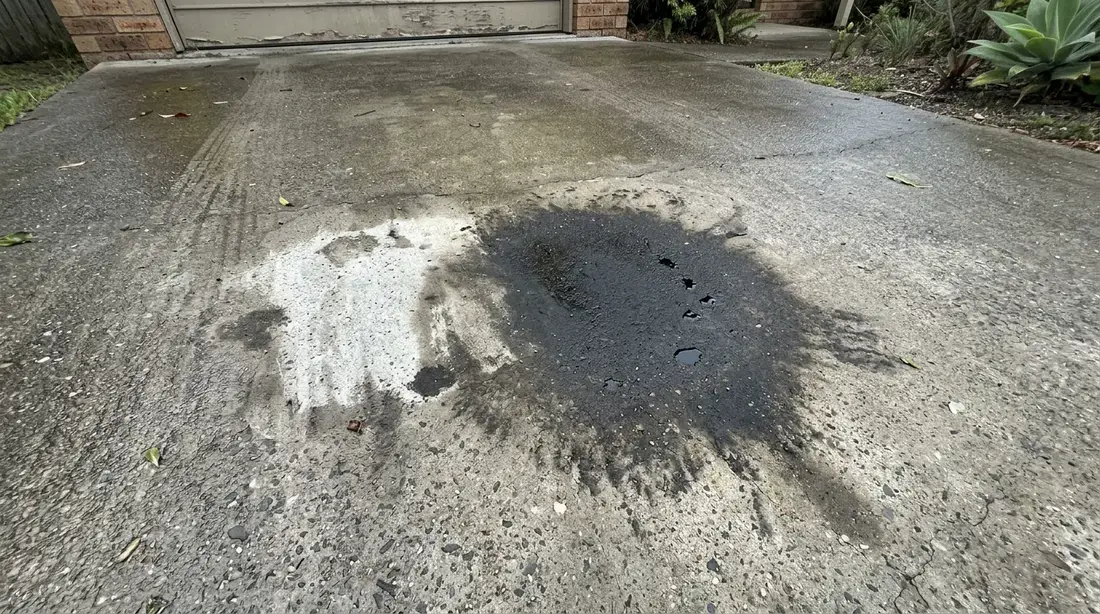
Oil is degreased and, where it has gone deep, drawn out with a poultice. Sealer will not bond over oil, and the stain becomes permanent under it.
- 04
Profile if the surface is too smooth
A steel-trowelled or previously sealed slab may need etching or grinding so the coating has something to key into.
- 05
Dry, then check the moisture
Give it the full dry window and confirm it with the plastic sheet test before anything is opened. This is the step people skip and the step that decides the outcome.
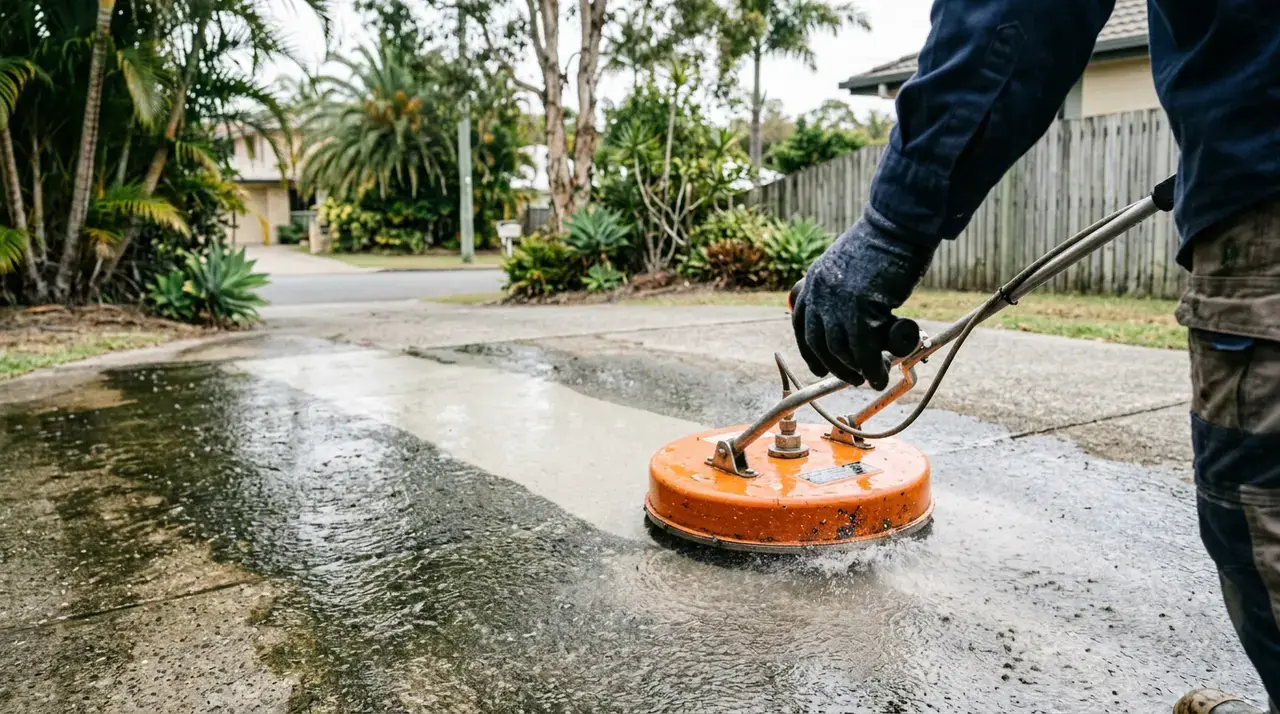
If you are having the driveway cleaned anyway, that is the natural moment to decide. The clean is already done, the slab is already assessed, and the only additional requirement is the weather window.